
Last updated November 4, 2026. Program rules are from Government of Canada pages read that day; Calgary prices are from CREB®’s October 2026 release, the latest month published.
TL;DR
- Start with money you can move tax-efficiently: an FHSA lets you put in $8,000 a year, up to $40,000 in total (CRA), and the RRSP Home Buyers’ Plan lets you withdraw up to $60,000 (CRA). You can use both for the same home.
- Know your minimum down payment before you shop. At CREB’s October 2026 benchmark prices, that ranges from about $14,440 for a typical Calgary apartment to about $48,510 for a typical detached home (our arithmetic, using FCAC rules and CREB prices).
- Get pre-approved, then pick an agent, then shop. In that order.
- Buying brand new? The first-time home buyers’ GST/HST rebate can be worth up to $50,000 on a home of $1 million or less (CRA).
Buying your first place in Calgary is mostly a sequence problem. People who get stuck usually did a later step first: they toured homes before they knew their budget, or signed with a builder before they understood the rebate rules. Below is the order we’d follow, with the federal programs explained in plain language and every number linked to where it came from.
Step 1: Check that you count as a “first-time buyer”
The federal programs don’t all define it the same way, but the common thread is the four-year rule. For the GST/HST rebate, for example, you must not have lived in a home owned by you or your spouse or common-law partner as your main residence in the year you buy or in the previous four calendar years (CRA). The FHSA and Home Buyers’ Plan use a similar test, so if you sold a home a few years ago, check each program’s page before counting on it.
Step 2: Line up your savings accounts
First Home Savings Account (FHSA)
An FHSA is the most generous tool for most first-time buyers. You get $8,000 of contribution room in the first year you open one (CRA), with a lifetime limit of $40,000 (CRA). Contributions are generally tax-deductible, like an RRSP, and a qualifying withdrawal to buy your first home isn’t taxed, like a TFSA. Room only starts once the account is open, so opening one early, even with a small deposit, is worth it.
RRSP Home Buyers’ Plan (HBP)
The HBP lets you take up to $60,000 out of your RRSPs to buy or build a qualifying home (CRA). It’s a loan to yourself: you pay it back over 15 years. For a first HBP withdrawal made between January 1, 2026 and December 31, 2028, repayments don’t start until the fifth year after the withdrawal, so a 2026 withdrawal means your first repayment year is 2031 (CRA). CRA confirms you can use the HBP and an FHSA withdrawal for the same home, as long as you meet each program’s conditions.
Step 3: Work out your real budget, not just your approval
In Canada the minimum down payment is 5% on a home of $500,000 or less. Between $500,000 and $1.5 million it’s 5% of the first $500,000 plus 10% of the rest, and at $1.5 million or more it’s 20% (Financial Consumer Agency of Canada). Put down less than 20% and you’ll typically need mortgage loan insurance.
Here is what that means at Calgary’s October 2026 benchmark prices from CREB. The minimums are our own arithmetic using the federal rules above:
- Apartment condo, benchmark $288,800: minimum down payment about $14,440
- Row/townhouse, benchmark $407,500: about $20,375
- Semi-detached, benchmark $685,200: about $43,520
- Detached, benchmark $735,100: about $48,510
A benchmark is a “typical home” price, not a quote, so your actual number depends on the home. Two more federal rules affect the monthly payment: first-time buyers have been able to get a 30-year amortization on an insured mortgage since December 15, 2024 (Department of Finance Canada), and rates move with the Bank of Canada, which raised its policy rate to 2.5% on October 28, 2026 (Bank of Canada). Leave room in your budget for closing costs, a home inspection, insurance and moving, and for condo fees if you’re buying a condo.
Step 4: Get pre-approved
A pre-approval tells you what a lender will actually offer and usually holds a rate for a set period. It’s also what makes your offer credible when you find the right place. Ask your lender or broker how they treat FHSA and HBP money in your down payment, and how long those withdrawals take to arrive, so the funds land before your closing date.
Step 5: Choose your agent, then shop
With a budget in hand, pick the person who will help you write offers. Interview more than one, ask how many first-time buyers they’ve helped recently, and how they’d approach the part of the city you’re looking at. Our guide to choosing a Calgary realtor covers what to ask, and our Top 5 Calgary real estate agents page shows the agents we list and how they rank.
Where you shop changes how much leverage you have. CREB reported that Calgary apartment condos had over five months of supply in October 2026 and a benchmark price eight per cent lower than a year earlier, while detached and semi-detached markets stayed relatively balanced (CREB). In plain terms: first-time buyers looking at condos and townhomes generally have more room to negotiate right now than those competing for detached homes.
Step 6: Make an offer with the right conditions
Most first-time buyers write offers that depend on financing and a home inspection. For a condo, add time to review the condo documents: the reserve fund study, budget, recent board minutes and bylaws. These tell you whether a special assessment might be coming.
For a house, ask for the seller’s Real Property Report. In Calgary it should carry a City of Calgary Certificate of Compliance, which confirms that the structures on the lot comply with the Land Use Bylaw. A garage or deck built without permits shows up here, before it becomes your problem.
Step 7: Claim what you’re owed after closing
Two federal benefits are claimed after you buy. The home buyers’ amount lets eligible first-time buyers claim up to $10,000 on line 31270 of their tax return (CRA), which works out to a tax credit of up to $1,500 (CRA).
If you bought a newly built home from a builder, check the first-time home buyers’ GST/HST rebate. It can return up to 100% of the GST, to a maximum of $50,000, on a new home valued at $1 million or less, gradually reducing to nothing at $1.5 million (CRA). The agreement with the builder must be signed on or after March 20, 2025 and before 2031 (CRA). It doesn’t apply to a typical resale home.
First-time buyer FAQ
Can I use an FHSA and the Home Buyers’ Plan together?
Yes. CRA says you can withdraw under the HBP and make a qualifying FHSA withdrawal for the same home, as long as you meet the conditions for each at the time of each withdrawal (CRA).
Do I need 20% down to buy in Calgary?
No. The minimum is 5% on the first $500,000 (FCAC). With less than 20% down you’ll typically pay for mortgage loan insurance.
Does the GST rebate apply to resale homes?
No. The first-time home buyers’ GST/HST rebate is for newly built or substantially renovated homes used as your main residence (CRA).
Where can I compare Calgary agents?
Our Top 5 agents page lists the agents we rank and explains how the ranking works.
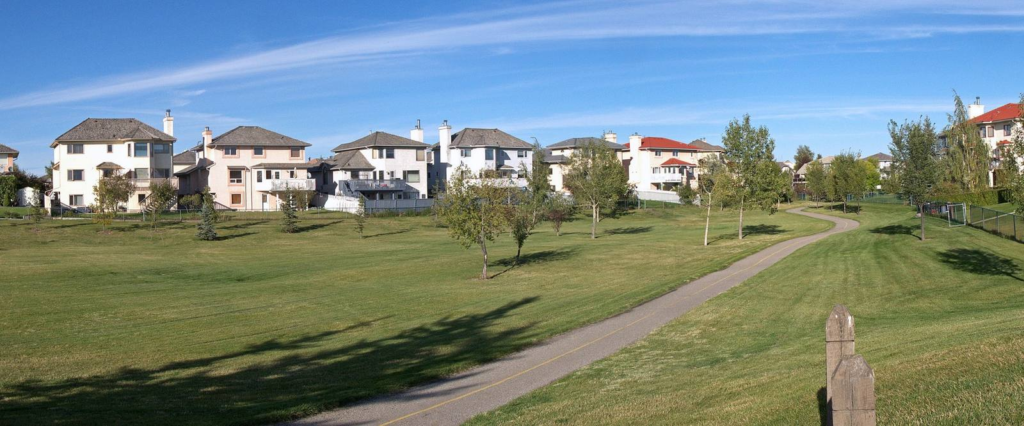
Header photo: “Calgary – Monterey Park” by Benefactor123, CC BY 3.0, via Wikimedia Commons (cropped and resized). This article is general information, not tax, legal or mortgage advice; program rules can change, so check the linked Government of Canada pages before you act.


